Cutting tables and beds
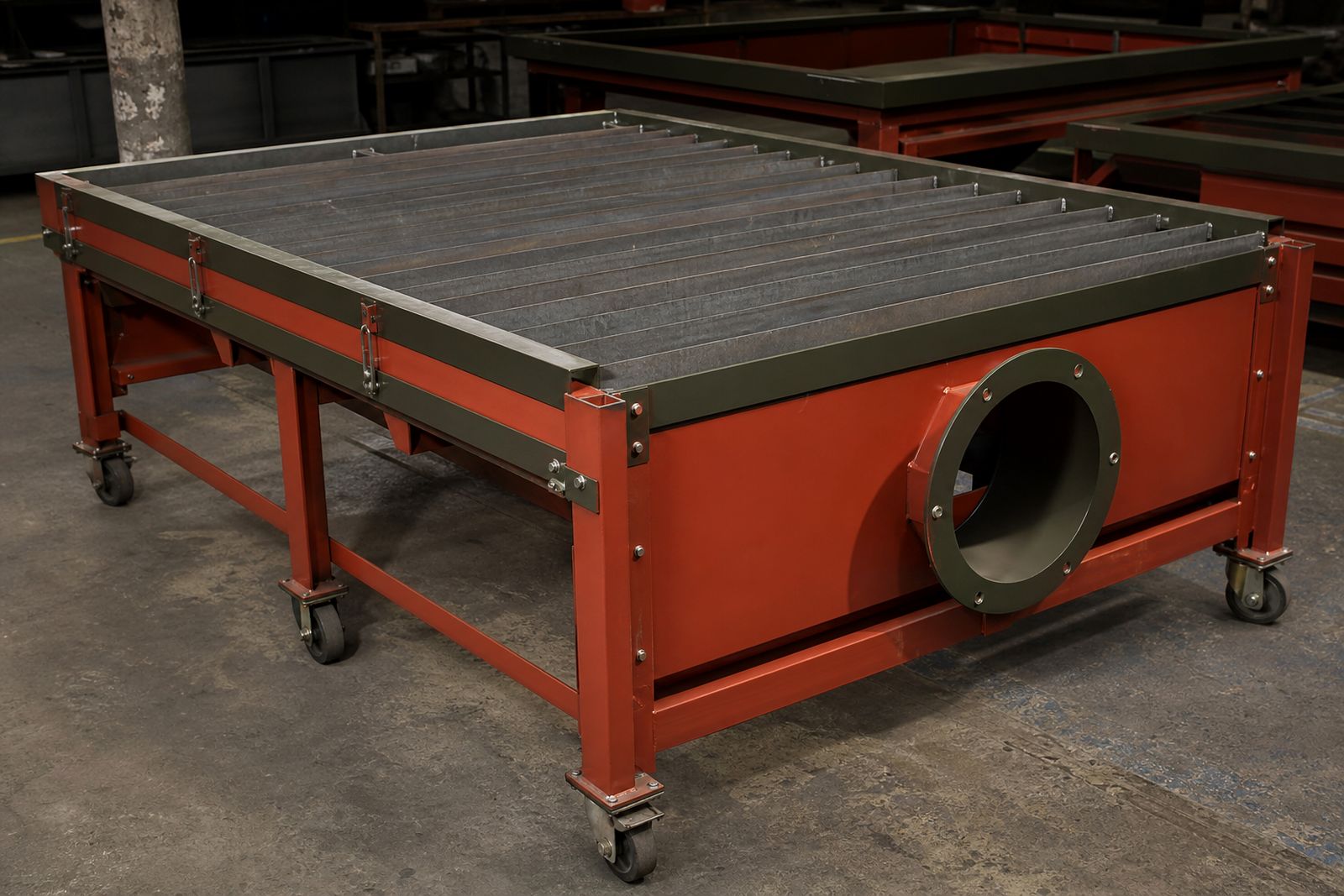
Our cutting tables and beds are built around the sheet size you run and the gantry you plan to mount. Water tables, downdraft beds and day-to-day workshop conditions usually shape the final choice.
Built around the cutting job and your required size
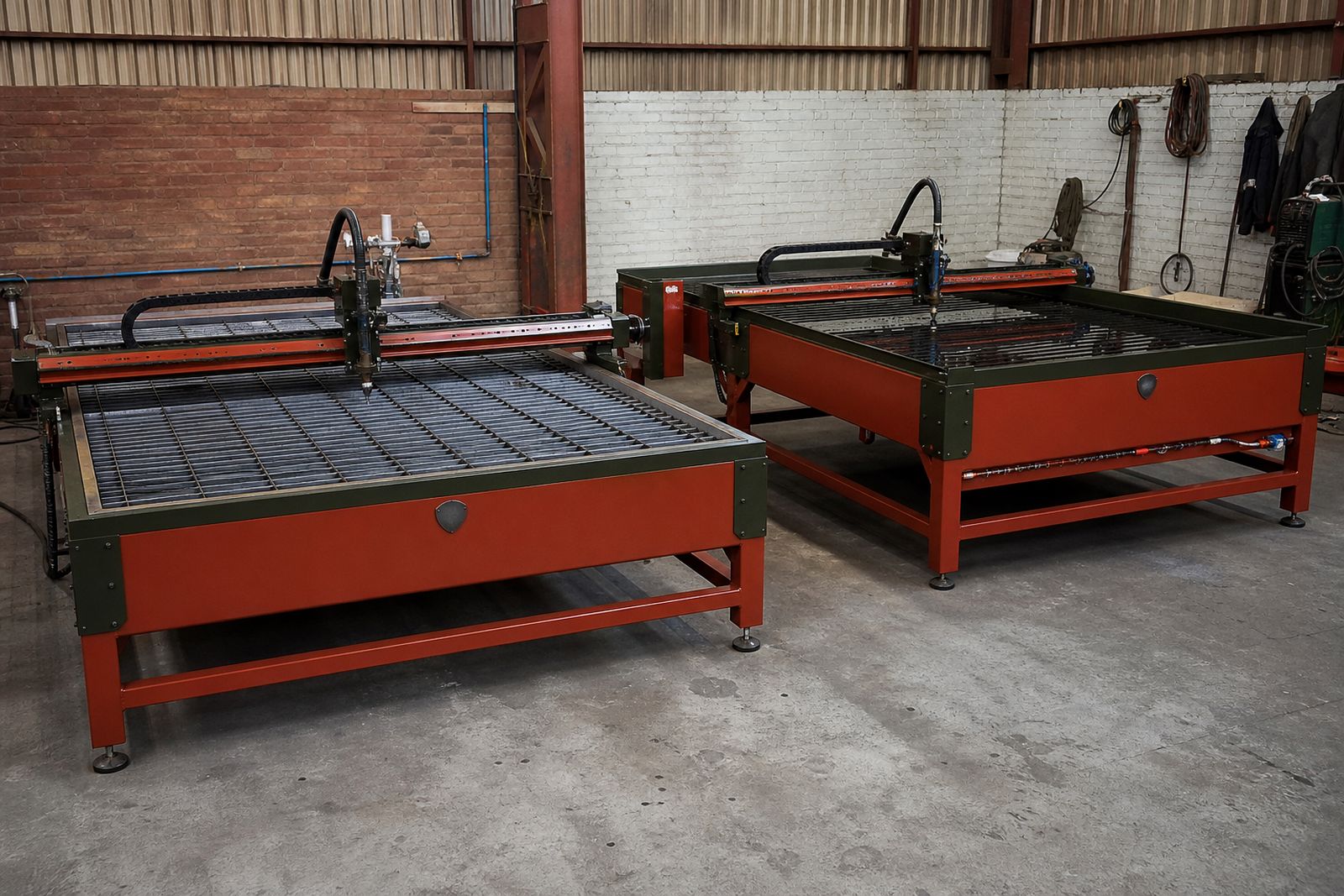
At CNC Plasma Tables we make the bed, frame and slat layout that sits under your cutting process. That means the important starting points are your sheet size, the travel you need, the weight of the gantry, and how you want to handle fumes and dross in your shop. Some workshops need a compact bed for light fabrication, while others want a full water table for daily plate work.
We build in Epping, Cape Town and deliver across the Western Cape, including Bellville, Paarl, Worcester and George. Flat-packed kits can also be shipped to the rest of South Africa where a workshop wants to handle its own assembly. We make the table, bed structure, slats and related fabricated parts only. CNC controllers, plasma power units, complete machines and used machines are outside our scope.
Two main routes: water tables or downdraft beds
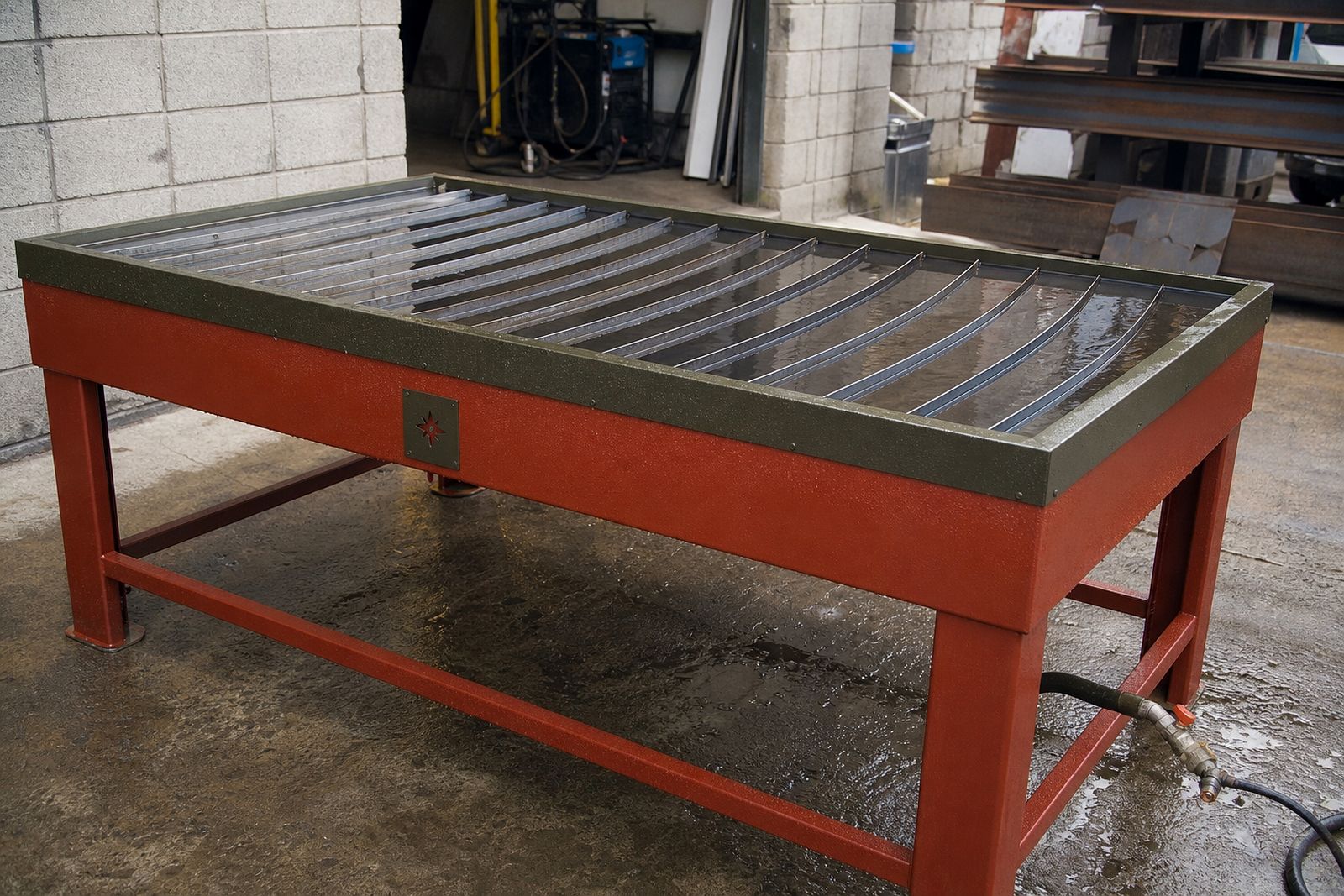
Most buyers narrow the choice to two bed styles. A water table places the cutting zone over a water pan to help with smoke, dust and heat. A downdraft bed uses extraction below the cut area and is better suited where water is not wanted near the work. Both can be sized to suit your material width and length, with slat packs laid out for easy replacement.
- Water tables suit many general steel cutting jobs where smoke control at source matters and the workshop is happy to manage water level and clean-out.
- Downdraft beds suit shops that already run extraction and want dry handling below the plate.
- Portable and lighter builds suit smaller spaces, site moves or workshops that need a bed that is easier to position.
- Heavier fixed frames suit regular production where stability and repeat loading matter more than mobility.
If you are comparing the two, think about your material mix and how your team cleans the bed at the end of a week. That tends to settle the matter fairly easily.
Points that usually decide the right bed
Sheet size matters, and plate thickness, duty cycle, spark load, floor space around the machine and the way you load sheets also affect the frame and slat arrangement. Workshops near the coast also need to think about moisture, surface rust on slats and how often the bed will be washed out or stripped down.
- Your usable cutting area and the sheet sizes you buy most often.
- The gantry footprint, rail spacing and support points under the frame.
- How you load material, by hand, forklift or overhead handling.
- Access for slat changes, dross removal and pan cleaning.
- Whether the bed must be moved through a narrow opening or taken to an upper floor workshop.
- The balance between a flat-packed kit and a fully built welded frame.
Where municipal workshop rules or lease terms affect extraction equipment, a downdraft setup may need more planning on your side. A water table often reduces airborne mess at the source, but it adds cleaning work and water management that some shops would prefer to avoid.
A practical comparison from the workshop floor
There is no universal best option, only the bed that fits the way you cut. These are the trade-offs we talk through most often with fabricators in Cape Town and further out in the province.
- Smoke handling: water tables usually keep smoke closer to the cut zone, while downdraft beds depend on extraction layout and airflow below the plate.
- Clean-out: water pans collect fines and dross in a different way; downdraft beds shift the maintenance to dry collection and ducted extraction on your side.
- Corrosion: coastal humidity can be harder on exposed steel and slats, especially where water stands for long periods.
- Shop environment: dry extraction can keep the bed area less wet, but a poor extraction setup can leave more airborne residue in the workspace.
- Mobility: lighter table builds are easier to move and install, while heavier beds usually feel better under regular loading and thicker plate.
For many small to mid-sized workshops, the final choice often comes down to the person who has to clean the machine on Friday afternoon. That sounds blunt, but it is true.
Frames, slats and kits made to work together
The bed is only as usable as the parts you can replace without a fight. We make replaceable slat packs, supporting frames and structures, plus DIY table kits for workshops that want to complete the build in-house. If you already have a gantry plan or an existing frame footprint, we can work around those dimensions and build to suit them.
Slats are treated as wear parts, not permanent fixtures. A bed that allows easy slat swaps and sensible access for clean-out will cost less in stoppages over time even if the initial frame is a bit more involved. We can also supply a bed-only solution where your team is handling motion components separately, which is often the neatest route for custom machine builds.
Working out the best fit for your gantry
Before a table or bed is built, we need the real working dimensions and the practical limits around them. Rail spacing, overhang, plate support, leg placement and access zones all matter. A table that looks right on paper can still be awkward in a tight shop if forklift access or operator walkways were not considered, so we like to pin those details down early.
If you are deciding between a water table, a downdraft bed or a DIY kit, send the sheet size, gantry dimensions and your town through our contact form. We can then look at whether a lighter portable frame, a heavier fixed bed or a flat-packed kit makes the most sense for your workshop.
Explore the range
Questions we get asked
Can you build a bed to suit my existing gantry?
If you already have gantry dimensions, rail spacing and the intended cutting area, the bed and support frame can be made around those figures.
Do you sell a complete CNC plasma machine?
We make the tables, beds, slats, frames, structures and DIY kits. CNC controllers, plasma power units, complete machines and used machines are outside our scope.
Which is easier to maintain, a water table or a downdraft bed?
Each option has its own maintenance demands. Water tables need pan clean-out and water management, while downdraft beds rely on a properly planned extraction side and dry waste removal.
Tell us about the job
Send sizes, materials and where you are through our contact form, and we will come back with the practical options.
Open the contact form