Downdraft beds
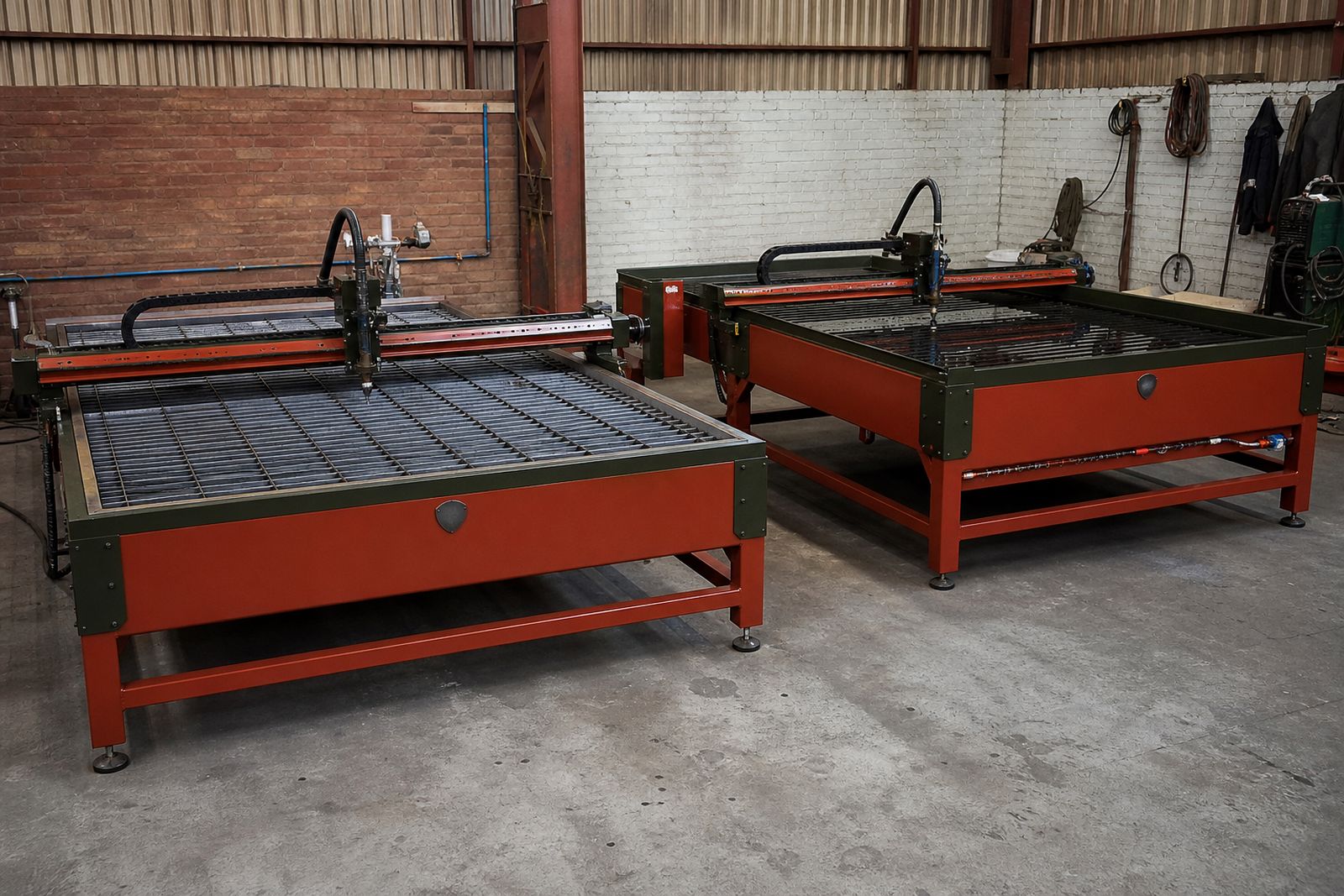
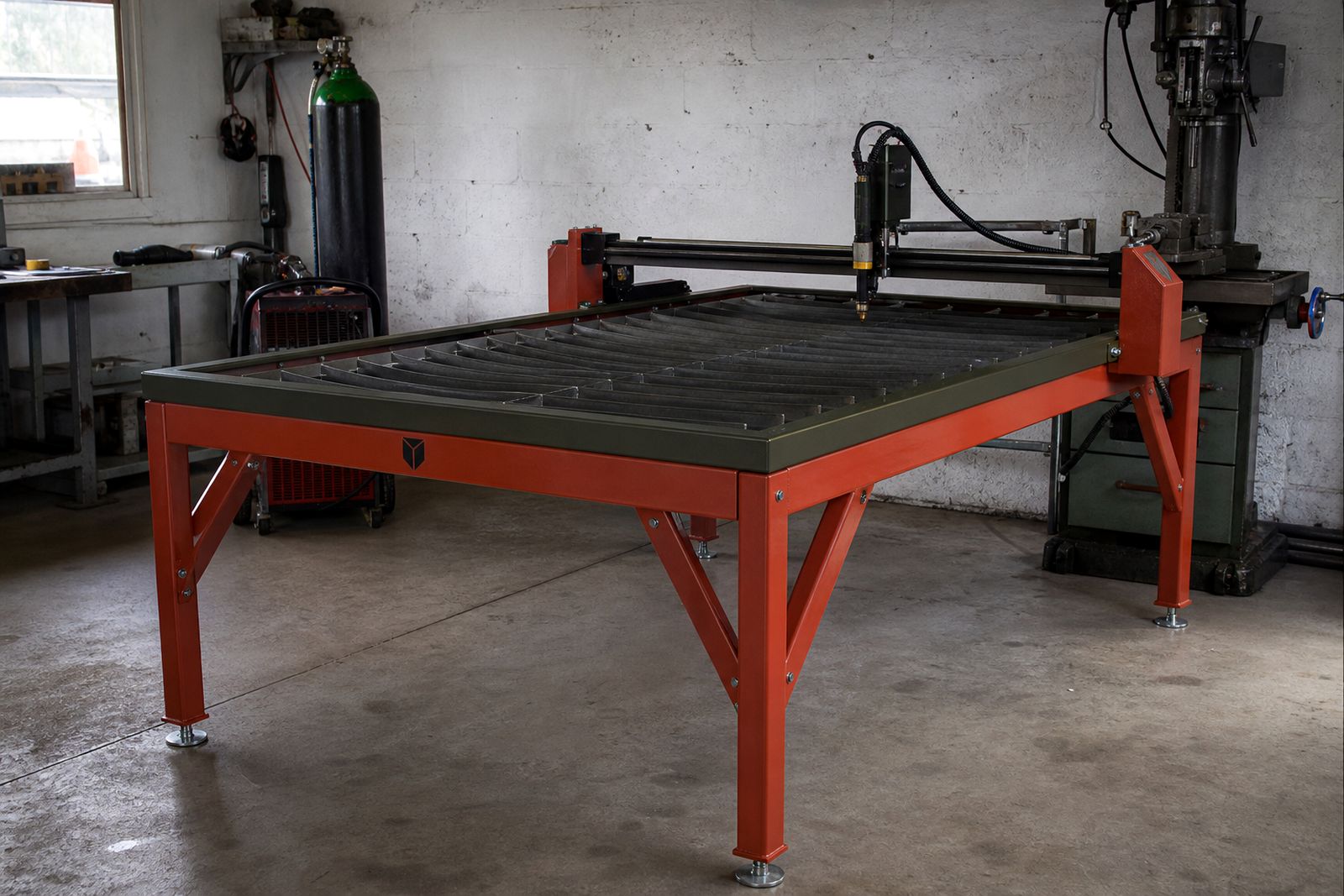
Our downdraft beds are built for plasma shops that want a dry cutting surface with controlled extraction under the plate. Each bed is made in Epping with zone dampers, replaceable slat sections and frame options to suit new builds or retrofit work.
A dry bed built around extraction zones
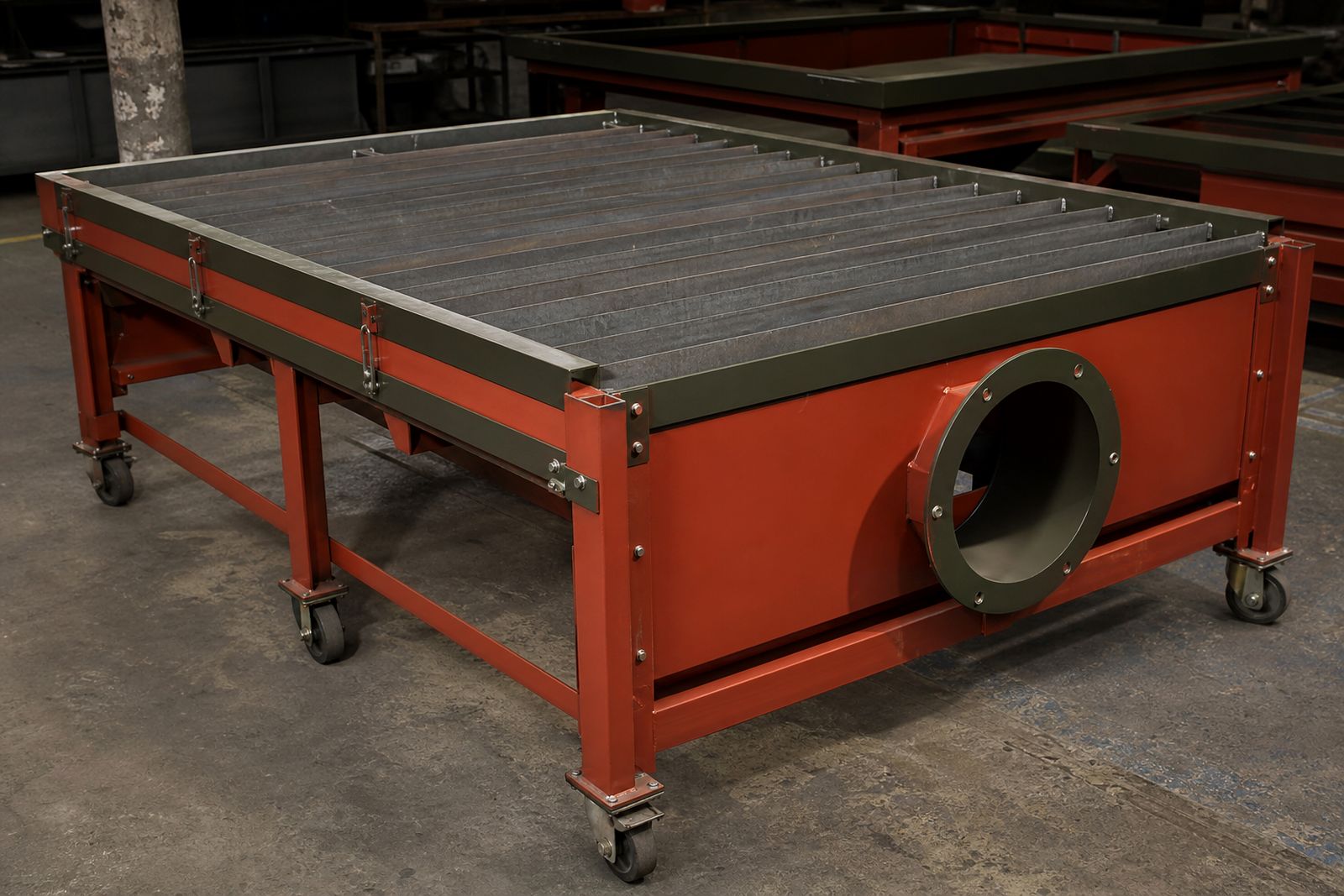
A downdraft bed pulls smoke and fine dust downward through the slat area instead of using water to catch debris. On this setup the bed is divided into zones, with dampers that open where cutting is taking place and close off the rest of the table. That helps keep air movement concentrated under the torch path rather than wasting pull across the full bed.
For workshops cutting indoors this format suits jobs where water is not wanted near parts, where plate handling needs a dry surface, or where operators prefer easier scrap clean-out below the cutting area. We make the bed, slat packs, support frame sections and duct take-off points. We do not sell the extraction fan, CNC controller, power unit or a complete machine.
- Zoned bed layout with manual damper positions
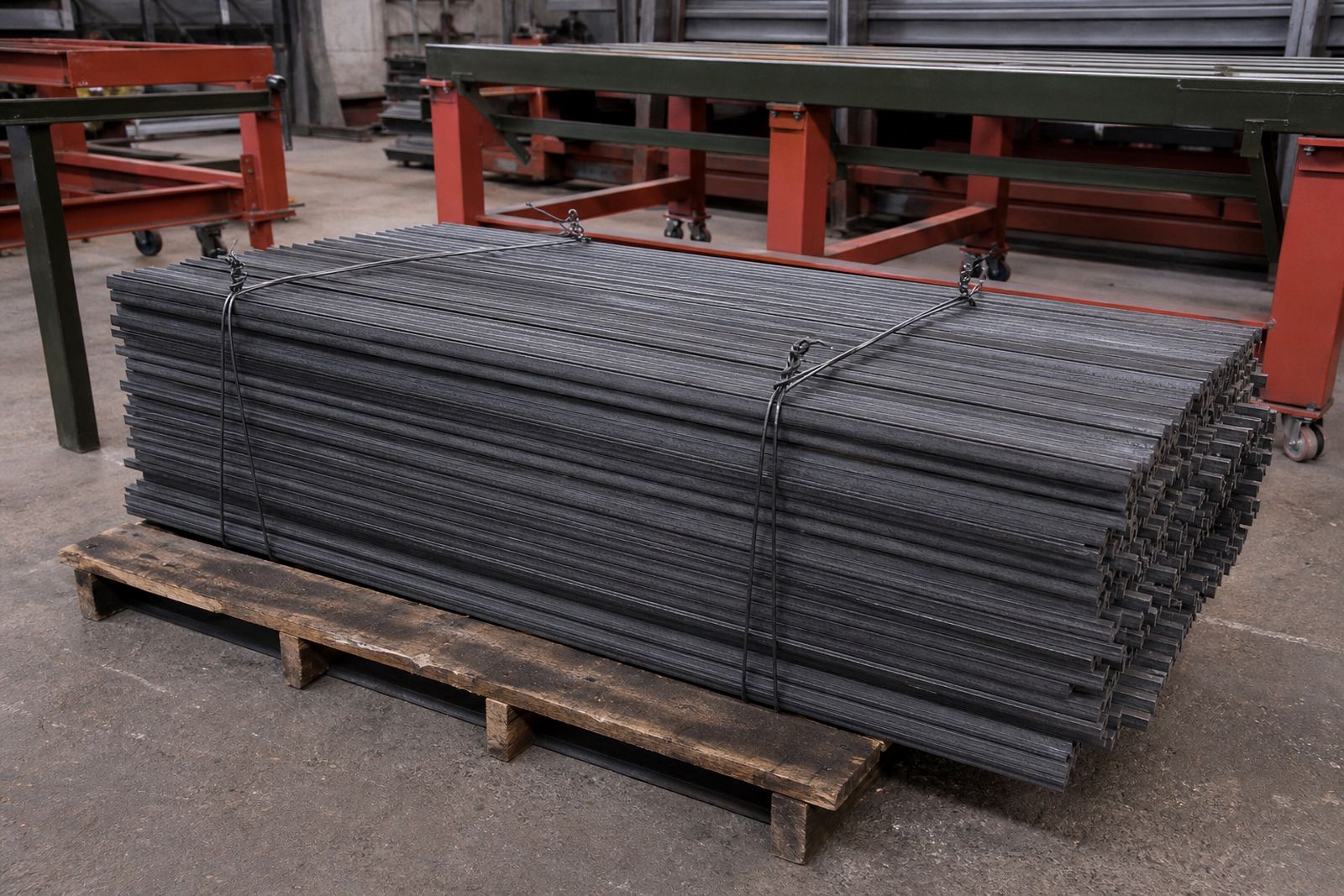
- Replaceable slat packs for routine wear areas
- Fabricated frames for new tables or retrofit projects
- Flat-packed options where site access is tight
Sizes, layouts and working limits
Most enquiries are for bed footprints that match common plate handling sizes, including compact workshop tables and larger production formats. We can build around 1 250 x 1 250 mm, 1 500 x 3 000 mm and similar footprints, or work to the cutting width and rail spacing you already have. Slat depth, plenum depth and leg structure are set to the duty of the job and the extraction volume available on site.
Working limits matter on a downdraft setup. If the plate is very thick, if pierce frequency is high, or if the fan and ducting are undersized, smoke capture drops off fast. Thin sheet and general mild steel work usually suit a downdraft bed well. Heavy plate work can still be done, but the extraction side must be sized honestly for it or the shop floor will tell you quickly. On longer beds we normally split the plenum into multiple sections so the active cut area can be isolated.
- Compact and full-sheet bed sizes available
- Single-zone, two-zone and multi-zone layouts depending on bed length
- Slat pack spacing adjusted for plate support and scrap fall-through
- Frame heights set for your gantry clearance and loading method
Where this setup suits the job, and where it does
A downdraft bed suits shops that want a dry cutting area for plate marking, direct part handling and less moisture around material stock. It also suits sites where water management is a headache, especially in shared industrial units where runoff and sludge handling can become a mess. For indoor work in Epping, Bellville and Paarl we often see a dry bed chosen where the extraction route is straightforward and the operator wants clear access under the slats for clean-out.
A downdraft bed suits floors with a practical extraction route, a fan position close enough to the bed, and work that is not dominated by very thick plate with long hot cuts. A water table often suits heavy plate work and difficult extraction layouts better. Coastal humidity calls for closer attention to dust build-up inside ducting and to paint condition on structural sections. A dry bed also needs proper spark control in the extraction system. That part must be planned before cutting starts.
Site requirements before the bed arrives
A working downdraft system needs space for the table footprint, access for assembly, a flat floor and a sensible route for ducting to the extraction unit. If your workshop has shallow roller doors, tight corners or mezzanine columns, tell us early so we can split the frame and plenum into manageable sections. Flat-packed kits help where access is awkward, but the assembled bed still needs proper alignment.
For accurate fitting we need the gantry rail spacing, torch travel envelope and intended plate loading method. Forklift loading and side loading need different thinking around leg placement and frame bracing. If the bed is going into an existing machine frame, send the opening size, support points and photos from all four sides. A few clear dimensions upfront usually avoids rework later, even if the shop drawing starts off a bit rough.
- Level floor with enough bearing capacity for plate and frame mass
- Measured duct exit position and extraction direction
- Access width and height for bringing parts into the shop
- Machine rail, gantry and slat reference dimensions for retrofit work
Cleaning, slat changes and routine care
Downdraft beds need regular housekeeping. Slag and small offcuts collect below the slats and if they are left too long they restrict airflow through the plenum. The slats themselves are wear parts. Once they start to twist badly, lose height or catch parts during lift-out, it is time to replace the affected pack rather than fighting every sheet on the table.
Routine care is straightforward. Remove scrap, check damper movement, inspect the plenum for blockages and look at the hottest cutting lanes first because those slats usually go first. If your work mix includes many repeated nests in the same zone, keep spare slat packs ready for that section. We make replacement slat packs and related bed components to keep the table serviceable rather than forcing a full rebuild.
What to send with your enquiry
When you contact us through our contact form, include the bed size you need, whether this is for a new build or an existing machine, and whether you want a full frame, a bed only, or a flat-packed DIY kit. If the project is a retrofit, send photos, rail spacing, overall outside dimensions and the clear opening where the bed must sit. It also helps to know the material types and thickness range you cut most often.
If the table is going to George, Worcester or elsewhere outside Cape Town, tell us whether you have offloading equipment on site. We deliver across the Western Cape and ship flat-packed kits to the rest of South Africa, so packing format matters on larger beds. We can then quote the right bed sections, slat layout and frame arrangement without guessing.
- Cutting area or plate size required
- New frame, retrofit bed or DIY kit
- Material type and normal thickness range
- Photos and measured dimensions of the existing setup
- Town for delivery or collection planning
What our Plasma Table customers say
Verified Google reviews
Questions we get asked
Do you supply the extraction fan and ducting?
We make the downdraft bed, slat packs, frame sections and related structure. Extraction fans, ducting, controllers and plasma power equipment are outside our scope.
Can a downdraft bed be fitted to an existing table frame?
It can be fitted if the existing machine dimensions and support points are suitable. Send rail spacing, opening size and photos so the bed can be matched to the frame properly.
When is a water table a better option?
A water table often suits heavier plate work, long hot cuts or shops where extraction routing is difficult. If you are comparing both options, the job mix and your site layout usually make the decision clearer.
Also worth a look
Tell us about the job
Send sizes, materials and where you are through our contact form, and we will come back with the practical options.
Open the contact form